A stretch of transparent turquoise ice reaches toward the horizon, groaning softly as tectonic forces shift beneath more than 1,600 metres of crystalline fresh water. The Siberian sun casts long golden beams across frost-covered pressure ridges, while steam rises from your mug into the crisp air. Winter on Lake Baikal reveals a vast frozen inland sea, yet the prospect of facing temperatures below minus thirty degrees Celsius naturally gives you pause. You might wonder whether your standard winter coat can withstand Siberian winds, whether your smartphone will shut down within seconds, or whether you'll spend the entire journey shivering inside heavy, suffocating layers. That is exactly why gear for Lake Baikal deserves its own careful attention.
Decades of combined guiding experience on the ice eliminate the guesswork. Staying comfortable in the Siberian winter does not require cumbersome polar gear; it demands an intelligent clothing system that traps warm air, repels piercing winds, and wicks away perspiration. When you pack with precise knowledge of how sub-zero weather behaves, you replace anxiety with absolute comfort, freeing your mind to absorb the silence of the world's deepest lake.
What Minus Thirty Degrees Actually Feels Like on Lake Baikal
Dry continental air defines the climate around Lake Baikal. Minus twenty degrees Celsius in Eastern Siberia often feels far more manageable than a damp zero degrees on the coast of Europe, because dry air draws heat away from your skin at a much slower rate. Wind, however, instantly changes that equation. On rare occasions, local winds such as Sarma or Kultuk can intensify the sensation of cold. Preparing for Baikal means, above all, accounting for possible wind chill.
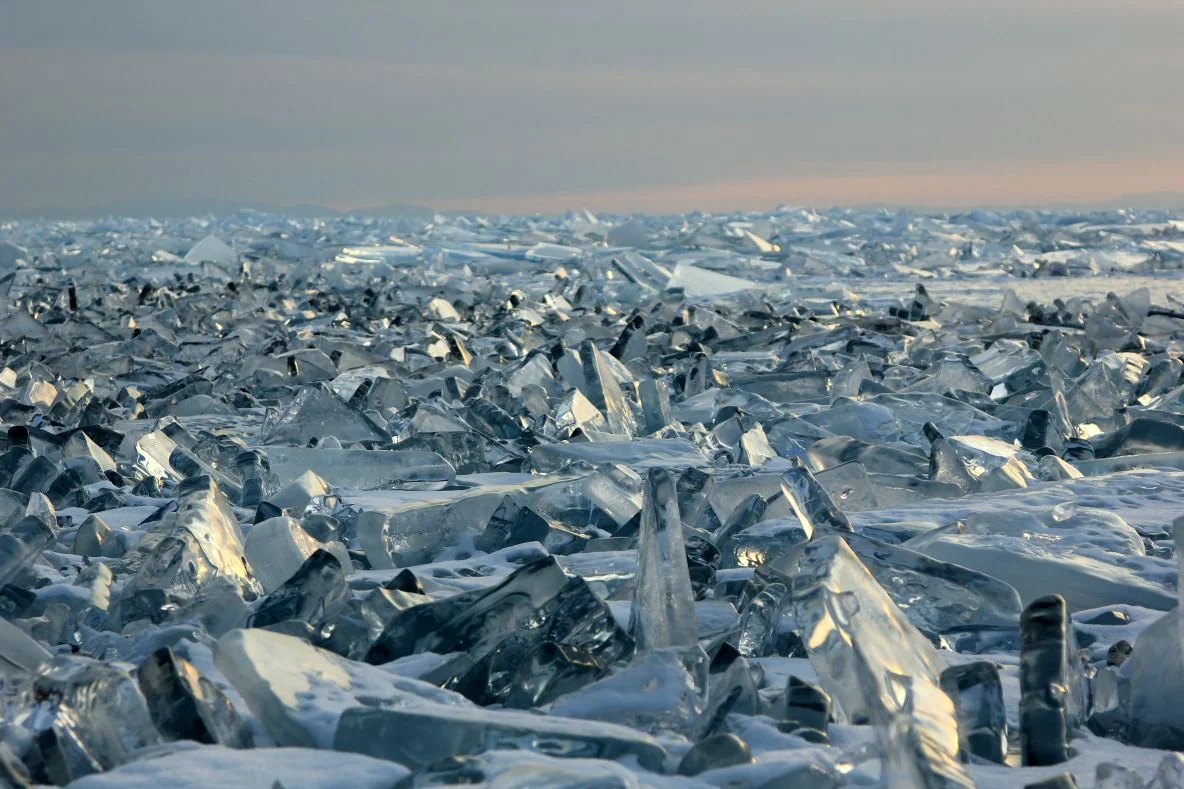
Mid-January marks the complete freezing of the lake, turning the water into crystalline sheets. The period from mid-January through February and the first two weeks of March offers the best window for exploration, delivering the clearest ice surfaces, stable ice routes, and abundant sunshine. During these months, daytime temperatures typically hover between minus fifteen and minus twenty-five degrees, occasionally dropping below minus thirty at dawn.
Baikal Majestic uses different types of transport for different sections of the route: hovercrafts where necessary and UAZ vehicles on accessible ground roads. All transfers are carried out in warm, heated vehicles by our trusted partners. We make sure every journey is safe and comfortable, regardless of weather conditions.
The Three-Layer System: What to Wear in Siberia Without Freezing or Overheating
The secret to staying warm on frozen Baikal lies in three cooperating layers, not in a single massive coat. This strategy allows you to adjust your clothing as your activity level changes, whether you are hiking along the rocky cliffs of Olkhon Island or riding inside an expedition vehicle.
Your base layer sits directly against your skin, and its primary task is moisture management. When you walk or explore ice caves, your body perspires; if that moisture stays on your skin, it cools rapidly once you stop moving, increasing the risk of hypothermia. Pure merino wool with a fabric weight of 200 to 250 grams per square metre is the gold standard for Baikal. Merino insulates even when damp, breathes naturally, and resists odours over multi-day journeys. High-grade technical polyester offers an effective synthetic alternative, drying faster during strenuous climbs. Leave all cotton at home: cotton fibres absorb sweat, retain moisture, and can freeze into a cold, wet trap against your skin.
Your mid layer traps the warm air your body produces. Dense fleece jackets, such as Polartec fabrics weighing 200 grams per square metre or higher, create reliable thermal chambers while allowing moisture vapour to escape outward. On particularly cold mornings, when temperatures fall below minus twenty-five degrees, layering a lightweight down jacket or a compact synthetic vest over your fleece provides substantial thermal reinforcement without restricting movement.
Your outer layer protects you from piercing Siberian winds and falling snow. Choose an expedition-grade parka with a high down fill power of 700 or greater, rated for comfort down to minus thirty degrees. Make sure the parka has an insulated adjustable hood, a protective snow skirt to block drafts from below, and sturdy storm flaps over all external zips. Pair this coat with windproof ski trousers or heavy Gore-Tex pants with full-length thermal insulation and side ventilation zips.
| Ambient Temperature | Base Layer Specification | Mid Layer Configuration | Outer Shell Requirement |
|---|---|---|---|
| Minus 10°C to Minus 15°C | Medium-weight merino wool (200 g/m²) | Breathable microfleece sweater | Windproof insulated ski jacket |
| Minus 16°C to Minus 24°C | Heavy merino wool or technical polyester (250 g/m²) | Dense Polartec 200 fleece jacket | Expedition down parka with storm hood |
| Minus 25°C to Minus 35°C | Merino thermal base layer (250 g/m²+) | Polartec fleece combined with a lightweight down vest | Expedition parka rated to -30°C, plus insulated ski pants |
Footwear and Ice Safety to Protect Every Step
Cold ground draws heat from your body faster than cold air, making your boots the single most critical gear decision of your journey. Choose high winter expedition boots with waterproof membranes and thick synthetic insulation, such as Thinsulate. Brands with cold-weather pedigree, such as Baffin or Sorel, construct outsoles from dense vulcanised rubber compounds that prevent frozen surfaces from chilling the footbed.
Buy your winter boots one to one-and-a-half sizes larger than your normal shoe size. Tight boots constrict blood vessels in your feet, reducing peripheral circulation and chilling your toes within minutes. The extra interior space creates a warm pocket of trapped air and allows comfortable room for thick, cushioned merino wool socks without pinching your instep. Never wear regular cotton sports socks or denim trousers on the ice; denim stiffens into cold sheets in Siberian winds, and cotton socks retain perspiration until your toes turn numb.
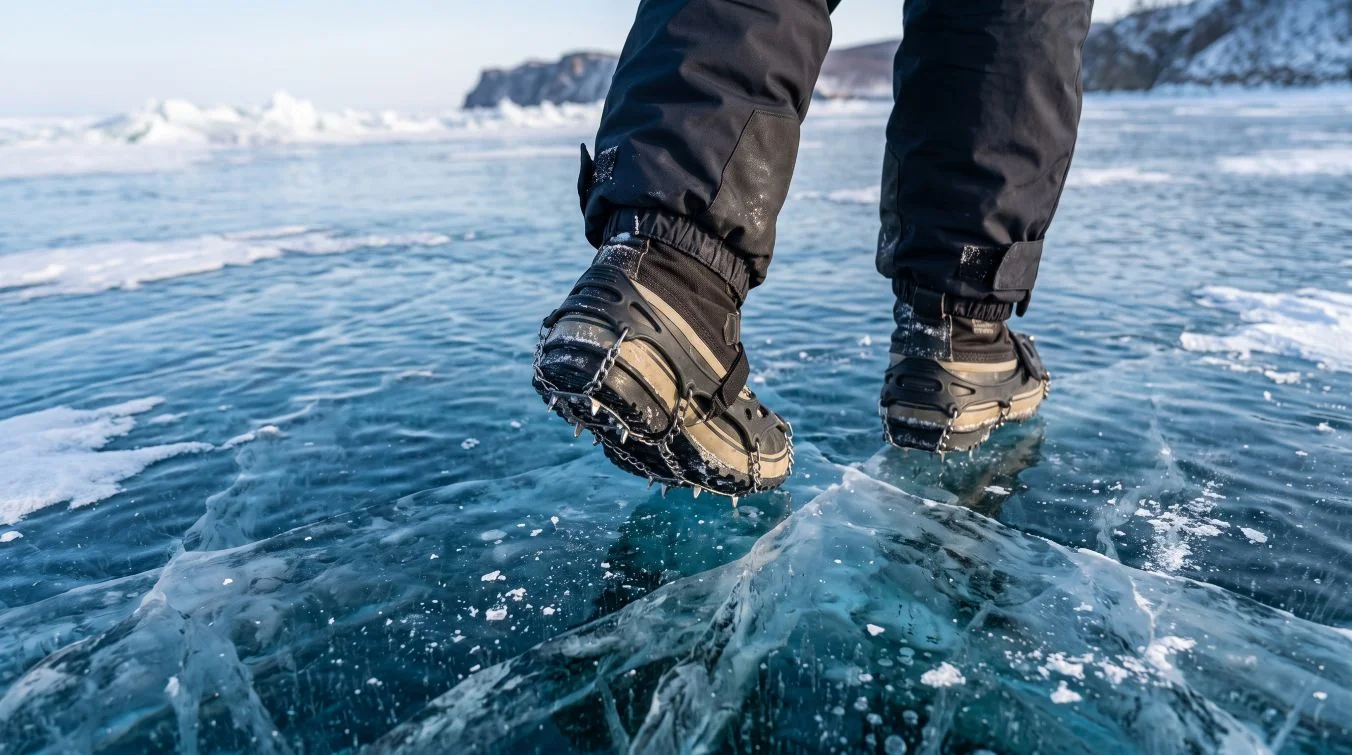
Ice on Baikal can be slippery, so to feel more confident and comfortable, we recommend bringing your own ice cleats (crampons) — they will help you move safely on the ice. Experienced guides check the routes daily and will show you how to avoid cracks and pressure ridges.
How to Protect Phones, Cameras, and Electronics on the Ice
Sub-zero Siberian temperatures drain lithium-ion batteries rapidly. Store your phone and camera batteries in deep interior jacket pockets close to your chest, where your own body heat keeps the cells active. Carry a high-capacity portable power bank inside an insulated pouch, running a charging cable through your sleeve only when necessary.
Disposable chemical hand warmers provide continuous warmth that shields delicate electronics. Professional ice photographers attach an activated hand warmer directly to the camera battery compartment using an elastic band, or keep one inside their battery pouch to maintain optimal operating temperatures during long shoots.
Moving between extreme cold and heated interiors poses a hidden hazard to camera lenses. When you bring freezing gear into a warm hotel lobby or traditional dining hall, humid indoor air condenses instantly on the cold metal and glass elements. This moisture can damage electronic circuits and leave permanent water marks inside optical elements. Always seal your camera gear inside your zipped backpack before entering any warm building, and leave it untouched for twenty to thirty minutes. This simple pause allows the equipment to warm up gradually, preventing condensation from forming.
Skin Protection, Eye Safety, and Cultural Etiquette in the Field
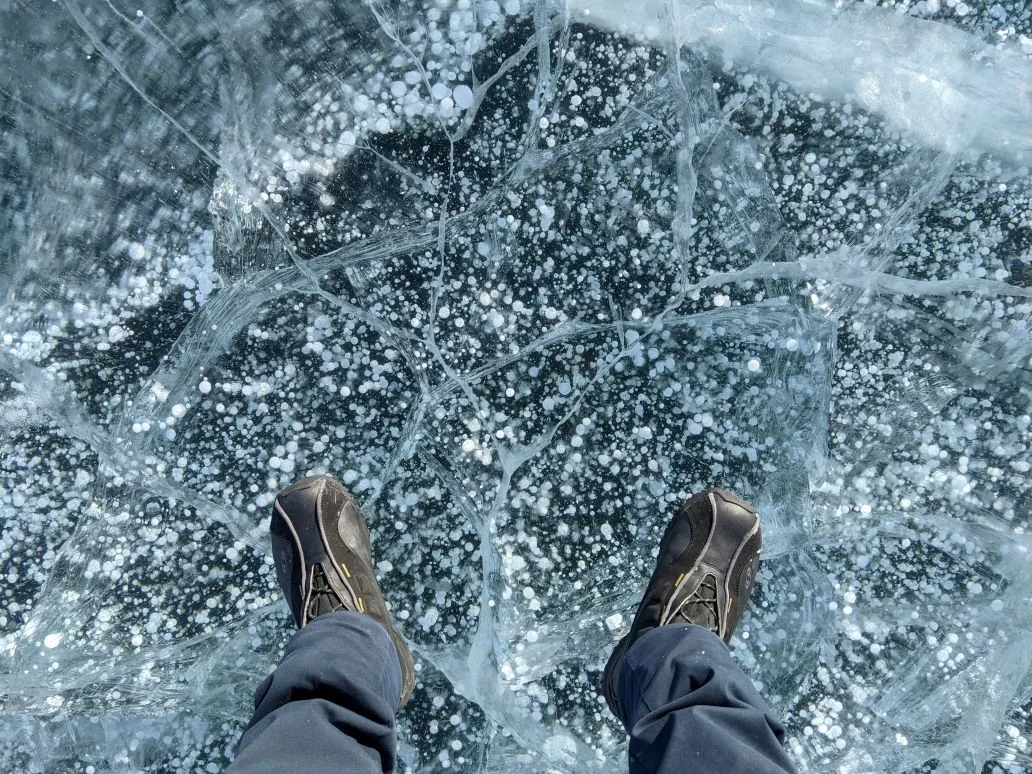
The vast plains of white ice reflect ultraviolet radiation upward with sharp intensity, doubling your sun exposure. Without proper eye protection, this glare can cause photokeratitis, commonly called snow blindness — a painful corneal burn that can impair vision for several days. Pack wraparound sunglasses or glacier goggles that offer certified UV400 protection and polarised lenses. Polarisation cuts through blinding surface reflections, allowing you to gaze straight into the deep cracks and frozen turquoise bubbles beneath your feet.
Standard daily cosmetics contain significant amounts of water, which becomes hazardous in deep Siberian cold. Water-based moisturising creams crystallise inside skin pores at minus twenty degrees, producing microscopic skin tears, irritation, and vulnerability to frostbite. Switch entirely to water-free, lipid-rich balms containing shea butter, beeswax, or nourishing plant oils. Apply a generous layer of rich protective balm to your cheeks, nose, and forehead thirty minutes before going outside, and protect your lips with an oil-based sun defence stick.
Respecting local traditions is part of responsible travel. To learn more about how to behave on Olkhon Island and at sacred sites, read our Lake Baikal safety guide.
What to Bring to Baikal in Winter: A Winter Travel Checklist
Managing winter transfers, ice navigation, and off-grid accommodation across Siberia creates considerable planning friction. Baikal Majestic removes this stress through heated hovercraft routes and other specialised transport, hand-picked lakeside lodges with private in-room heating, and native English-speaking guides who often have generational roots on the lake. You travel with complete confidence, free to focus on the frozen wilderness while the logistical burden stays on our shoulders.
Before you zip your expedition duffel, check this winter travel checklist — ten indispensable items:
- Heavyweight merino wool thermal base layer top and bottoms (200–250 g/m²).
- Dense technical fleece jacket or a breathable wool mid layer.
- Expedition down parka rated for minus thirty degrees Celsius with an insulated storm hood.
- Insulated, windproof ski or mountain trousers.
- Extreme-cold winter boots purchased one to one-and-a-half sizes larger than your usual fit.
- Multiple pairs of merino wool trekking socks or sports thermal socks.
- Polarised sunglasses or glacier goggles with certified UV400 protection.
- Water-free, oil-based facial balm and protective sun defence lip balm.
- A sturdy vacuum thermos for hot tea on the ice fields.
- An external power bank and chemical hand warmers kept in an insulated inner pocket.*
*Important to know before you fly:
Airlines have strict rules for carrying lithium batteries. Power banks and spare batteries must be carried in hand luggage only. Devices with a capacity up to 100 Wh are allowed without restrictions, those between 100 and 160 Wh require prior airline approval, and anything over 160 Wh is prohibited. Since 2026, there is also a limit of no more than two power banks per passenger and a ban on using them during the flight.
Frequently Asked Questions About Winter Travel on Lake Baikal
Does Lake Baikal freeze completely across its entire surface during winter?
Yes, the entire expanse of Lake Baikal freezes every winter, except for the source of the Angara River in the southern part of the lake. The freezing process begins in shallow northern bays in November and locks the southern part of Baikal by mid-to-late January. By February, the ice sheet can reach between seventy centimetres and two metres in thickness, easily supporting pedestrians, hovercrafts, and officially certified expedition vehicles on designated routes.
What ambient temperatures should I anticipate during the peak ice season?
From late January to early March, daytime temperatures typically settle between minus fifteen and minus twenty-five degrees Celsius. Early mornings and late evenings can drop to minus thirty-five degrees. Because dry air predominates, this cold feels invigorating when you wear proper windproof layers.
Is walking on the lake ice safe for international travellers?
Walking on the ice is safe when you explore alongside professional guides who monitor local ice charts and daily satellite reports. Cracks occur naturally as temperatures fluctuate, but local experts know how to read surface features and navigate pressure ridges safely. Never venture onto unmarked ice fields without professional local accompaniment.
Can travellers swim in Lake Baikal during the winter months?
Open-water swimming in the lake is impossible due to the thick ice crust, except for brief, supervised dips into carved ice holes following traditional banya steam sessions. For extended thermal soaking, natural hot springs can be found in some places along the lakeshore, offering mineral-rich thermal water surrounded by snowdrifts.
Do I need to speak fluent Russian to travel comfortably across Baikal?
You do not need Russian language skills when travelling with a team of local experts. Fluent English-speaking guides handle logistics, share regional history, and interpret local traditions throughout your stay.
Embracing the Siberian Winter With Confidence
Preparing for winter on Lake Baikal requires thoughtful planning, but the rewards surpass every effort. Standing atop hundreds of metres of translucent blue ice while listening to the distant resonance of the freezing lake is an unforgettable moment. By assembling a proven three-layer wardrobe, choosing properly sized boots, and safeguarding your skin and camera gear, you transform a demanding sub-zero climate into a comfortable encounter with raw nature. Pack with precision, respect the living spirit of the lake, and welcome the adventure across the Siberian ice.
Planning a winter trip to Baikal?
We know how important it is to travel light and feel confident in any frost. If you have a question about gear — or want to know what we provide on tour — just send us a message. We'll share reliable information and help you pack without excess.