The ice beneath your feet groans and shifts — a deep, resonant crack that travels for miles across a frozen mirror so clear you can see straight down into the abyss below. Above you, a sky full of stars. Around you, absolute silence. You are standing on the surface of the world's deepest lake, on an island so remote it once felt like the edge of the known world — and somehow, you feel completely at home.
This is Olkhon Island.
Not the Siberia of cold war movies or endless grey tundra. The real Siberia — wild, luminous, and quietly waiting for travelers who know where to look.
Olkhon Island is where ancient shamanic cliffs meet crystalline waters, where Buryat nomadic culture weaves through jaw-dropping Arctic landscapes, and where every single season rewrites what "beautiful" actually means.
Whether you're an adventure seeker, a photography obsessive, a culture lover — or simply someone ready for a journey that means something — this guide covers everything you need to turn Olkhon from a dream into your next great trip.
What Is Olkhon Island — and Why Should You Care?
Most travelers who visit Lake Baikal stop at Listvyanka — the well-worn resort town on the western shore, just an hour from Irkutsk. It's lovely. It's also just the appetizer.
The main course? A four-hour drive northwest, a short ferry crossing, and suddenly you're standing on a different planet entirely.
Olkhon Island is the largest island on Lake Baikal, stretching 72 kilometers from south to north and sitting almost perfectly in the center of the world's deepest freshwater lake. Roughly 1,500 permanent residents call it home — most of them Buryat people, an indigenous Mongolic ethnic group whose ancestors have lived along these shores for centuries. The island absorbs millions of years of geological drama into every cliff face, every bay, and every gust of wind rolling off the water.
This is not a place you pass through. This is a place that changes you.
The Geography That Makes Olkhon Unique
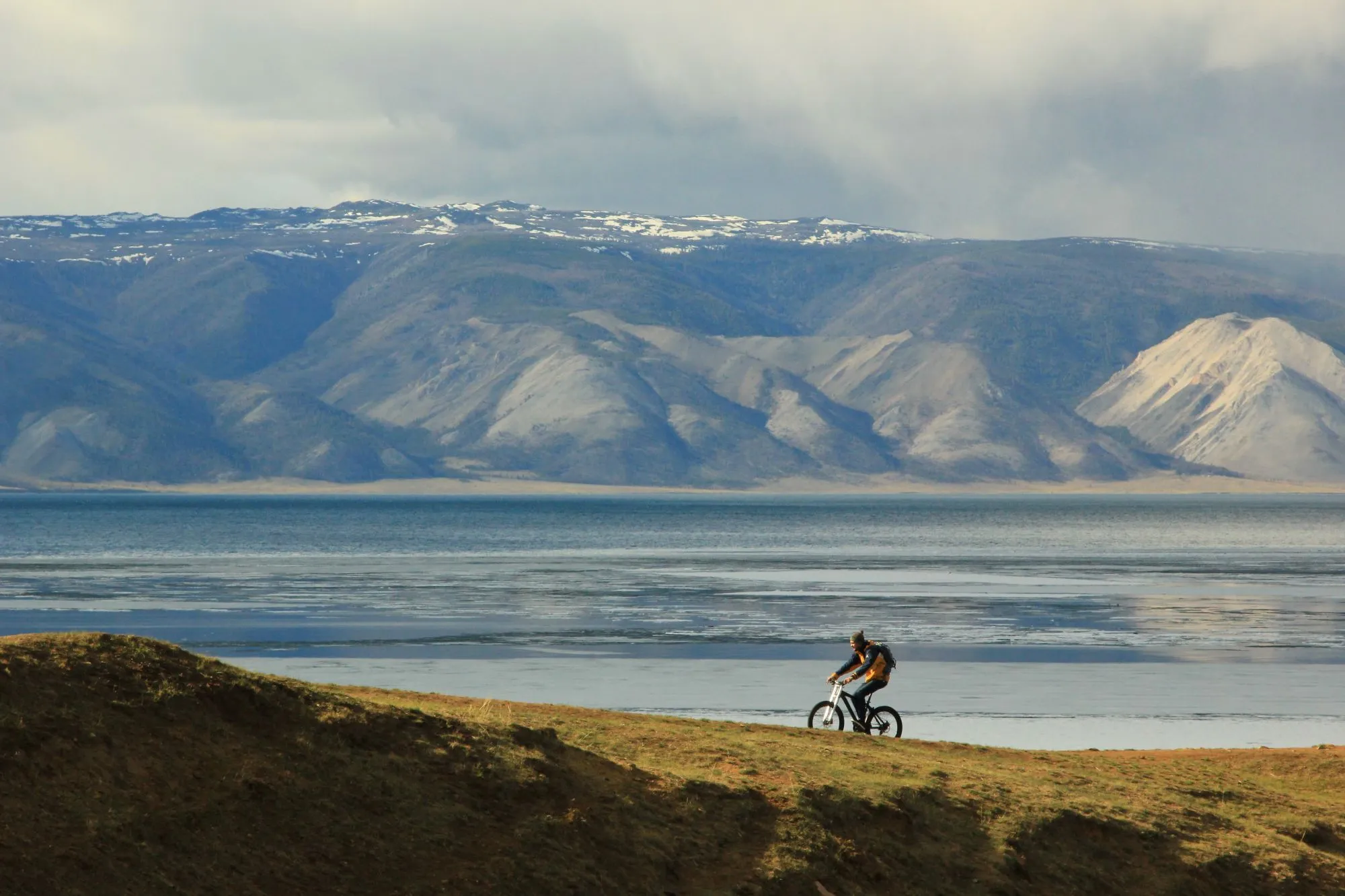
Here's something that surprises almost every first-time visitor: Olkhon contains three distinct climate zones — all within that same 72-kilometer stretch of land. In theory, you could see them in a single day. In practice, you'll want at least three — one for each world.
- The South: Open steppe grasslands, sun-bleached and windswept, looking more like the Mongolian plains than Siberia
- The Center: Dense Siberian pine forest surrounding Khuzhir, the island's main village and your natural base for any Olkhon island tour
- The North: Raw, dramatic cliffs dropping straight into the lake — culminating at Cape Khoboy, the island's northernmost tip, where the silence becomes something you can almost touch
This geographical range is exactly why a single visit to Olkhon never feels like enough. One day you're hiking through cathedral-quiet forest; the next, you're standing on a wind-hammered cliff above water so blue it looks digitally enhanced. And somewhere between the scent of pine and the spray of Baikal's impossibly fresh water, you realize: you'll have to come back.
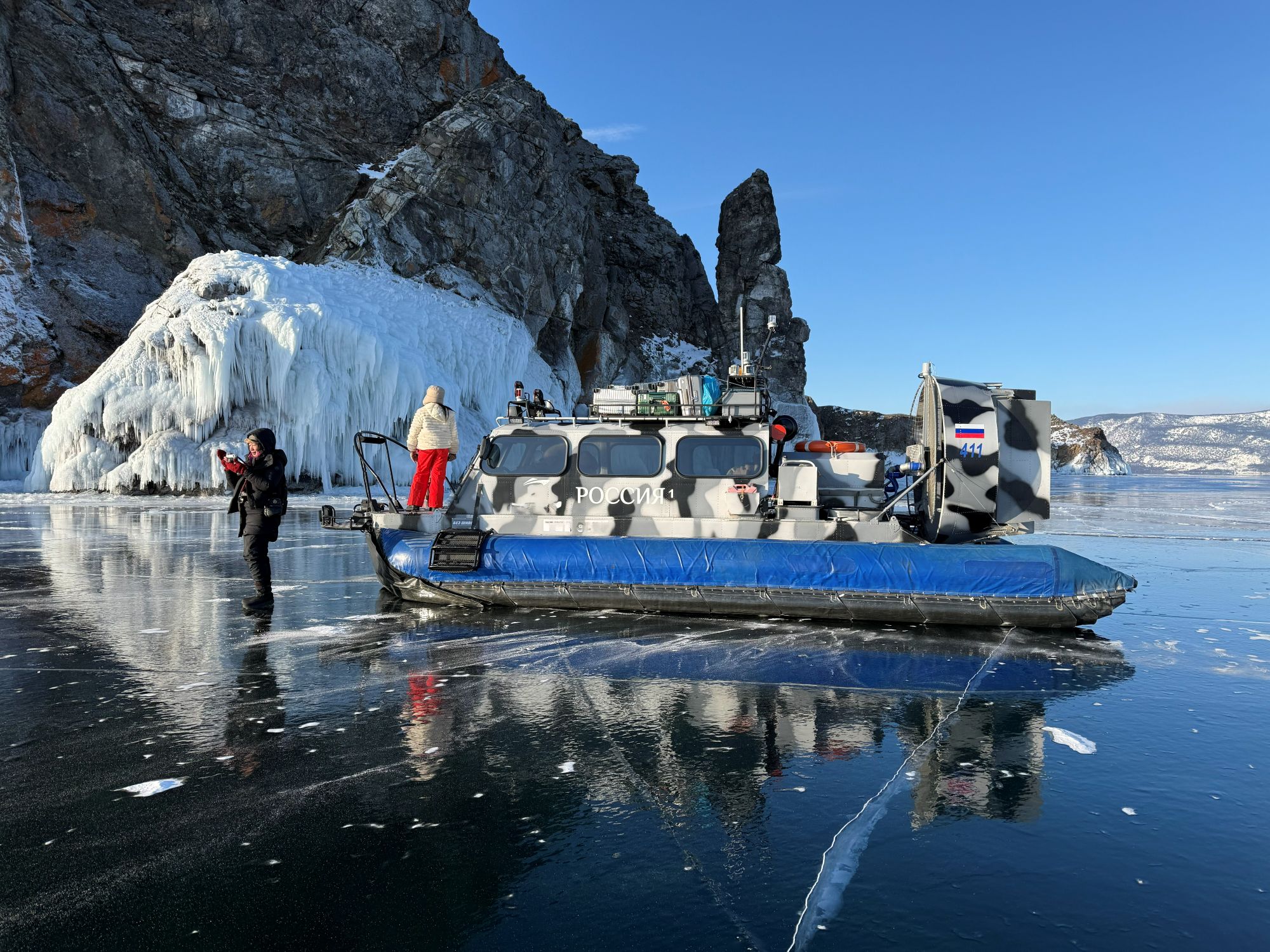
The island is separated from the mainland by two narrow straits — the Small Sea (Maloye More) to the west, and the main Baikal channel to the east. In summer, a ferry connects Olkhon to the shore in about 20 minutes. In winter, that same crossing becomes a highway of ice — traversable by Hivus hovercrafts, the thrilling yet surprisingly comfortable vessels that Baikal Majestic operates for its winter guests.
The numbers that put it in perspective:
- Lake depth directly off Olkhon's eastern shore: up to 1,637 meters
- Water visibility on a calm day: up to 40 meters — watch your shadow dissolve into the deep
- Average summer temperature in Khuzhir: +22–25°C — warm enough to swim, cool enough to hike all day
The terrain is wild, yes. But navigating it doesn't have to be rough. A well-planned Olkhon island tour — with proper vehicles, local guides who know every hidden bay, and warm accommodation at the end of each day — turns the island's ruggedness into pure, unfiltered adventure.
The Spiritual Heartbeat of Siberia
You don't have to believe in shamanism to feel something shift when you approach Cape Burkhan.
Also known as Shamanka Rock — from the Russian word шаман (shaman) — this dramatic two-peaked promontory rises directly from the lake's edge on Olkhon's western coast, just minutes from Khuzhir village. It is arguably the most photographed landmark in all of Siberia, and one of the most spiritually significant sites in the indigenous world.
According to Buryat shamanic tradition, Olkhon Island is one of nine sacred places on Earth where the energy of the natural world concentrates most powerfully. The Buryat people practice a form of shamanism — a spiritual tradition in which trained intermediaries called shamans communicate with the spirits of nature, ancestors, and the land on behalf of their community. On Olkhon, this tradition runs deep: the island's resident spirit, the Ezen of Baikal (the guardian master of the lake), is believed to dwell inside the cave at the base of Shamanka Rock.
What this means for you as a visitor:
- Respect the sacred zones: Certain areas around Shamanka Rock are off-limits to visitors. Your guide will point out the accessible areas — including the serge poles (carved wooden poles, often wrapped in colorful ribbons), which the Buryat people erect at sacred sites as a sign of respect
- The ribbons have meaning: The blue, white, and yellow ribbons tied to trees and posts across the island are called zalaa in Buryat — offerings to the spirits of the land. They are not decorations. Please don't remove or disturb them
- Shamanic rituals still happen here: Not staged for tourists — as genuine ceremony, following the lunar calendar and the community's spiritual needs. If you witness one, observe quietly and follow your guide's lead
What makes Olkhon genuinely extraordinary is that this spiritual life isn't performed for an audience. It simply exists. The Buryat elders still consult shamans. The rituals still follow the seasons. The lake is still addressed as a living presence.
Baikal Majestic works closely with Buryat cultural experts to ensure every guest engages with this heritage respectfully and meaningfully — not as spectators of an exhibit, but as welcome guests in someone's living home. Your English-speaking guide brings this world to life with the kind of nuance and context that no travel blog can replicate.
Some places deserve more than a quick selfie. Olkhon is one of them.
Top 10 Reasons Olkhon Island Belongs on Your Bucket List
Travel long enough and you start recognizing the difference between places that look good in photographs and places that actually feel different when you're standing in them. Olkhon Island, Russia is emphatically the second kind.
Here's why travelers who make it here almost universally say the same thing: "Why did I wait so long?"
1–4 — Nature's Greatest Hits
1. The Clearest Water You Will Ever See
Lake Baikal holds 20% of the world's entire surface freshwater — and it holds it with almost supernatural clarity. On a calm day off Olkhon's shores, visibility reaches up to 40 meters. Lean over the edge of a dock in Khuzhir bay and watch your shadow dissolve into deep, depthless blue. It's disorienting — in the best possible way. This transparency exists because Baikal's water is continuously filtered by millions of tiny crustaceans called epishura — microscopic organisms found nowhere else on Earth, quietly working for 25 million years.
2. The Blue Ice Phenomenon — A Winter Miracle
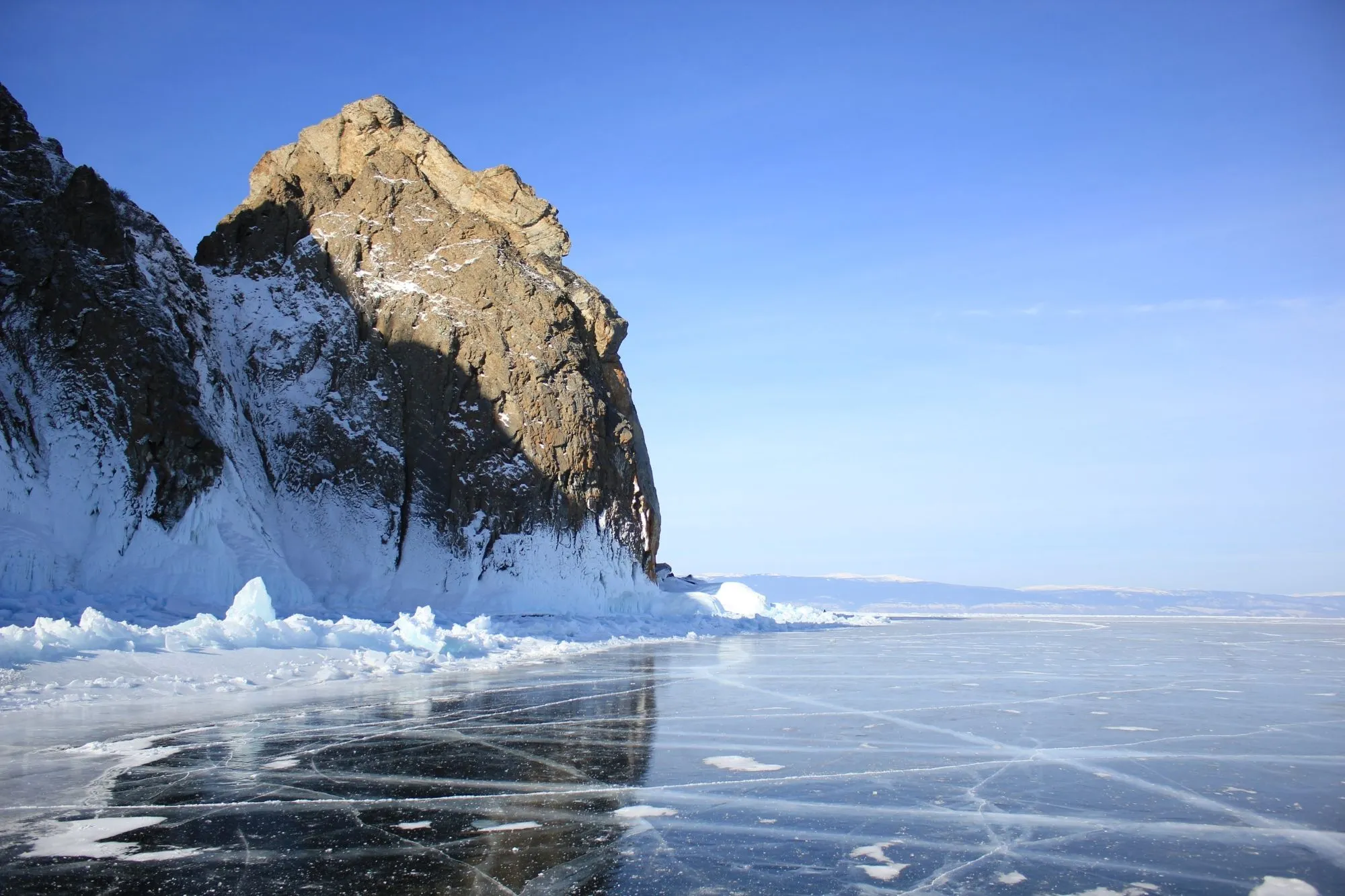
Every February, something happens on Lake Baikal that photographers fly across the world to witness. The lake freezes to up to two meters thick — and the ice turns an impossible shade of transparent turquoise blue.
- Pressure ridges called hummocks (torosi in Russian) erupt from the surface like frozen waves, some rising over two meters high
- Ice caves and grottoes form along Olkhon's eastern cliffs, their walls glowing aquamarine in the morning light
- Crack patterns spread across the surface like a shattered cathedral window — press your ear to the ice, and you can hear the lake breathing beneath you
This phenomenon belongs exclusively to Olkhon Island, Siberia. Nowhere else on Earth replicates it.
3. Three Landscapes in One Island
Most destinations offer one signature landscape. Olkhon delivers three — sometimes visible simultaneously from a single hilltop.
Stand on the ridge above Khuzhir on a clear afternoon: golden steppe rolls south, dark pine forest stretches east, and white-capped water shimmers in every direction. Drive north toward Cape Khoboy in a UAZ-Bukhanka (a legendary Soviet-era 4WD van, still the most capable vehicle for Olkhon's unpaved tracks) and the scenery transforms completely — trees thin out, cliffs sharpen, and suddenly you're in Viking-saga territory.
Comfort Note: Baikal Majestic's northern tours use fully equipped UAZ-Bukhanka vehicles with experienced drivers who know every rock and rut on these roads — adventure without the anxiety.
4. Wildlife That Exists Nowhere Else
Olkhon is not a nature reserve. It's a functioning habitat — raw, active, and quietly spectacular.
- Baikal seals (nerpa) — the world's only exclusively freshwater seal species, found nowhere outside Lake Baikal. In summer and early autumn, Baikal Majestic runs cruises that visit the Ushkan Islands — a protected archipelago where nerpa seals haul out on the rocky shores to bask in the sun. In spring, as the ice begins to break up in April, you can spot them climbing onto floating ice floes to rest and warm themselves — often visible during our northern Olkhon tours
- White-tailed eagles ride thermals above Cape Khoboy's cliffs — wingspans stretching up to 2.4 meters, close enough to make you reach for your camera involuntarily
- Siberian roe deer pick through the forest at dawn, visible from the road on early starts
- Arctic grayling and Baikal omul — endemic fish species you can watch being caught, smoked, and served within the same afternoon
5–8 — Culture, Adventure & Gastronomy
5. A Living Shamanic Culture — Not a Museum Exhibit
Most ancient spiritual traditions survive today in textbooks, documentaries, or reconstructed village displays. On Olkhon Island, Buryat shamanism is not a performance — it's simply part of daily life.
The island's Buryat community maintains active shamanic practice as a living part of daily life — not a cultural performance, not a heritage attraction. Shamans (бөө, pronounced böö) conduct ceremonies tied to the seasons, the lake, and the well-being of the community. Sacred serge posts mark protected territories. Offerings of dairy, grain, and ribbon appear at specific rocks and trees throughout the year.
Engaging with this culture knowledgeably and respectfully makes the difference between a sightseeing stop and a genuinely moving human experience — which is precisely what Baikal Majestic's locally rooted guides are trained to facilitate.
6. Hiking Trails That Reward Every Fitness Level
You don't need to be an athlete to fall in love with Olkhon on foot. The island offers a genuine spectrum:
| Trail Type | Example Route | Difficulty |
|---|---|---|
| Easy coastal walk | Khuzhir beach to Shamanka Rock | ⭐ Beginner |
| Half-day forest hike | Central pine forest loop | ⭐⭐ Moderate |
| Full-day cliff trek | Cape Khoboy northern route | ⭐⭐⭐ Challenging |
| Multi-day wilderness | South-to-north island traverse | ⭐⭐⭐⭐ Expert |
The terrain suits trekking poles and solid footwear well. Having a guide who knows where the trail ends and the cliff edge begins isn't just helpful — it's essential.
Meet omul (Coregonus migratorius) — a delicate, slightly fatty whitefish endemic to Lake Baikal and the undisputed culinary king of the region.
In Khuzhir, it comes in three essential forms:
- Hot-smoked (goryacho kopchyony) — golden skin, flaking flesh, eaten with your hands while the smoke still rises
- Cold-smoked (kholodno kopchyony) — drier, more intense, perfect with dark bread and something warming in a glass
- Stroganina — paper-thin slices of raw frozen omul, dipped in salt and pepper. Yes, it sounds extreme. Yes, it will become your favorite thing
Beyond omul, Buryat cuisine offers buuzy (steamed meat dumplings — pronounced boozy, and nearly identical to Mongolian buuz — eaten by biting a small hole in the dough and drinking the broth before the filling), thick lamb soups, and fermented mare's milk (Tarasun-Buryat milk vodka) for the adventurous. Every Baikal Majestic tour includes curated local dining experiences — because this food deserves more than a rushed roadside stop.
8. Star-Gazing on the Edge of the World
Olkhon sits in one of the lowest light-pollution zones on the Asian continent. On a clear night — and most nights here are clear, thanks to the island's exceptional microclimate — the Milky Way appears with a density that makes city dwellers go quietly emotional.
- The island averages over 300 sunny days per year — more than many Mediterranean destinations
- Autumn nights (September–October) deliver the clearest skies and the earliest darkness
- The lake's surface doubles the starfield in reflection — surrounded above and below
Bring a tripod. Set a 3am alarm. You won't regret either.
H3: 9–10 — The "Only Here" Experiences
9. Hovercraft Rides Across the Frozen Baikal
There is a moment unique to winter on Lake Baikal: you leave the shore on a Hivus hovercraft, the ice opens up before you like an infinite runway, the craft lifts on its air cushion, and suddenly you are flying two centimeters above the world's most extraordinary natural surface.
The Hivus is a Russian-engineered air-cushion vessel built for Siberian conditions. It crosses ice, slush, open water, and pressure ridges with equal composure — the only safe and comfortable way to reach the lake's most remote ice caves, hummock fields, and frozen viewpoints in winter.
Baikal Majestic operates Hivus hovercraft expeditions as the centerpiece of its winter Olkhon island tours — with heated cabins, professional drivers, and routes designed by guides who have spent years reading Baikal's ice. This isn't transport. It's the moment most guests call the highlight of their entire journey.
10. Sunrise at Cape Khoboy — Olkhon's Northernmost Point
No photograph does it justice. That's not a cliché — it's a calibration warning.
Cape Khoboy (from the Buryat word for fang or canine tooth) is a finger of white marble and limestone jutting into the lake at Olkhon's northern extreme. The cliffs drop vertically into water over 1,600 meters deep directly below your feet. On clear mornings, the rising sun lights the rock faces in amber, rose, and gold while mist rolls off the lake in slow, theatrical curtains.
Getting here requires an early start from Khuzhir — a 2.5-hour drive on unpaved northern tracks — the right vehicle, the right guide, and the right timing. Stand on that point at 6:47am on a September morning, watching the sun crack the horizon open over Siberia, and you will stop thinking about your inbox entirely.
When Is the Best Time to Visit Olkhon Island?
The honest answer: there is no bad time. But there is a right time for you — depending on what you want to feel, see, and do. Here's how each season plays out on the ground.
Summer on Olkhon (June–August) — The Classic Season
Summer is when Olkhon island tours fill up fastest — and for obvious reason. The island in July is warm, luminous, and almost aggressively beautiful.
What to expect:
- Temperatures in Khuzhir reach +22–28°C on peak days — warm enough for swimming, though the lake stays brisk at +10–14°C near the shore
- Daylight stretches past 9pm, giving you long, golden evenings on the beach with an omul in hand
- The Small Sea (Maloye More) — the sheltered strait between Olkhon and the mainland — becomes a turquoise playground: calmer and shallower than the open lake, ideal for kayaking, paddleboarding, and leisurely boat trips
- Wildflowers blanket the southern steppe in June; by August, forest trails reach peak lushness
The trade-off: July and early August bring the highest visitor numbers to Khuzhir. The island never feels crowded by global standards — but the iconic viewpoints will have company at golden hour. Book your Olkhon island tour 3–4 months ahead for summer travel.
Best for: First-time visitors, families, photographers who prefer warm-light landscapes, swimmers, hikers
Winter on Olkhon (February–March) — The Photographer's Paradise
If summer is Olkhon in its full volume, then winter is Olkhon in its full depth.
The Small Sea strait freezes by mid-January, and the entire lake surface follows by the end of the month. This means you can visit Olkhon as early as right after the New Year holidays — and sometimes even during the holidays themselves, if the strait freezes early and you're up for an adventure. At that time, the island is quieter, the ice is fresh, and you'll have the stunning views mostly to yourself. The peak of the blue ice season — when thickness, clarity, and light align perfectly — runs from early February through the end of March, offering two breathtaking months of prime ice conditions. The entire winter season, however, lasts from mid-January to late March, giving you over two months to experience the magic of frozen Baikal.
What winter on Olkhon actually looks like:
- Transparent turquoise ice stretching to every horizon, fractured into geometric patterns by pressure and temperature shifts
- Ice hummocks (torosi) — jagged ridges of compressed ice erupting from the surface, some taller than a person
- Ice caves along Olkhon's eastern cliffs, vaulted ceilings glowing blue-green in diffused winter light
- Temperatures ranging -15°C to -25°C — cold, but dry and still, making it far more bearable than damp urban winters at similar temperatures
Baikal Majestic Winter Advantage: Every winter Olkhon tour includes Hivus hovercraft access, professional ice-safety equipment, heated overnight accommodation in Khuzhir, and guides who check daily ice conditions in real time. You focus on the beauty. We handle everything else.
The trade-off: Ferry service stops in deep winter — crossing happens by hovercraft or, at peak freeze, by vehicle on the official ice road. This is precisely why having an experienced operator matters enormously.
Best for: Photographers, adventure seekers, couples looking for a once-in-a-lifetime experience, anyone who has already done summer Baikal
Shoulder Seasons — The Hidden Gems (May & September–October)
Here's what Baikal insiders know: shoulder seasons deliver Olkhon at its most atmospheric — with significantly smaller crowds.
May — The Awakening:
- Ice clears by late April; May brings the first tourist ferries back to the island
- The southern steppe erupts in wildflowers — irises, peonies, and wild garlic painting the grasslands purple and white
- Mild temperatures (+12–18°C) make for ideal hiking conditions without summer heat
- You'll often have Cape Khoboy entirely to yourself — a rare and remarkable thing
September–October — The Golden Hour of the Year:
- Siberian autumn turns Olkhon's forest amber, ochre, and rust
- September delivers the island's finest photography light — long shadows, dramatic clouds, and exceptional atmospheric clarity
- Water temperatures remain reasonable for the determined swimmer (+8–10°C)
- Stargazing peaks as nights lengthen and skies stay crystalline
- November brings the first ice forming on the Small Sea — a mesmerizing transitional beauty that belongs to no other season
Pro Tip: Shoulder season Olkhon tours offer more flexible scheduling and a more intimate group dynamic. Baikal Majestic runs small-group expeditions in May and September for travelers who want the full experience without the peak-season footprint.
Best for: Photographers, solo travelers, repeat visitors, anyone who values atmosphere and solitude over peak-season convenience
How to Get to Olkhon Island, Russia — A Practical Guide
Getting to Olkhon Island, Russia requires more intention than booking a flight to Paris. That's precisely the point — and precisely why it remains one of the least crowded extraordinary destinations on Earth. The journey itself is part of the experience. Here's exactly how it works.
Getting to Irkutsk — Your Gateway to Olkhon
Every Olkhon adventure begins in Irkutsk — a city of 600,000 on the Angara River, often called "the Paris of Siberia" for its surprising density of 19th-century merchant architecture, lively café culture, and beautifully preserved wooden townhouses.
Irkutsk International Airport (IKT) connects to major global hubs with surprising regularity:
| Departure City | Connection Type | Approx. Flight Time |
|---|---|---|
| Moscow (SVO/DME) | Direct | ~5.5 hours |
| Beijing (PEK) | Direct | ~3 hours |
| Seoul (ICN) | Direct | ~3.5 hours |
| Dubai (DXB) | Via Moscow | ~9–10 hours |
| London (LHR) | Via Moscow | ~10–11 hours |
| New York (JFK) | Via Moscow or Seoul | ~16–18 hours |
Pro Tip: Aeroflot, S7 Airlines, and Air China all service Irkutsk regularly. Booking 2–3 months ahead for summer, and 4–6 weeks ahead for winter, typically secures the best fares.
Build in one or two days in Irkutsk before heading to the island. The city offers a genuinely warm introduction to Siberian life:
- Walk the 130th Quarter (Kvartal 130) — a restored historic district of painted wooden buildings now housing restaurants and design shops
- Stroll the Angara River embankment at sunset for your first taste of Siberian scale
- Sit down to your first plate of Buryat buuzy at a local restaurant — consider it a warm-up for Olkhon's culinary scene
From Irkutsk to Olkhon Island — All Your Options
The distance from Irkutsk to the ferry terminal at Sakhyurta (MRS) — the mainland crossing point to Olkhon — is approximately 270 kilometers, running northwest along the lake's western shore through scattered Buryat villages and open steppe.
Your realistic options:
Option 1: Public Bus (Budget)
- Departs from Irkutsk Central Bus Station daily in summer
- Journey time: approximately 5–6 hours including the ferry crossing
- Cost: roughly \$10–15 USD one way
- Reality check: buses are functional but basic — no guaranteed English signage, limited luggage space, and schedules that flex without notice
Option 2: Shared Minivan (Marshrutka)
- Shared minivans depart when full from near the bus station — a popular middle-ground option
- Faster than the bus (~4–5 hours), cheaper than a private transfer
- Still requires navigating Russian-language logistics independently
Option 3: Private Transfer (Recommended)
- Door-to-door from your Irkutsk hotel to the ferry terminal, then directly to your accommodation in Khuzhir
- Journey time: approximately 4 hours in a comfortable, air-conditioned vehicle
- No language barrier, no schedule uncertainty, no luggage juggling
Baikal Majestic: Every Olkhon island Russia tour with Baikal Majestic includes a private transfer from Irkutsk Airport or your hotel — with an English-speaking guide meeting you at arrivals. Your first experience of Siberia shouldn't be deciphering a bus timetable in Cyrillic. It should be watching the landscape unfold from a comfortable seat, knowing exactly where you're headed.
The Crossing: Ferry vs. Hovercraft
The final stretch — from the mainland to Olkhon — changes completely with the season:
- Ferry operation (May–December): A free state-operated car ferry crosses from Sakhyurta roughly every 30–40 minutes. The crossing takes about 20 minutes — no ticket needed, but weekend queues in July can run long
- Winter operation (January–April): Ferry service stops once the ice thickens. Crossing switches to Hivus hovercrafts or, during peak freeze, vehicles on the official ice road — a surreal experience of driving across a frozen lake in its own right
- Shoulder seasons (November–December, April–May): The transition between ferry and ice road is unpredictable. This window demands local knowledge and flexibility — exactly what a guided Olkhon tour provides
Where to Stay on Olkhon Island
Accommodation on Olkhon island Russia has improved dramatically over the past decade. "Rustic" no longer means uncomfortable. Today, Khuzhir and its surroundings offer a genuine spectrum — from family guesthouses to thoughtfully designed lakeside lodges.
Khuzhir Village remains the logical base:
- Walking distance to Shamanka Rock and the main beach
- Home to the island's restaurants, small shops, and cultural landmarks
- Well-connected to northern and southern routes by road
Types of accommodation available:
Guesthouses (Gostevye Doma):
- Family-run, simple, and authentic — shared or private bathrooms available
- Ideal for budget travelers comfortable with basic conditions
- Limited English; booking requires Russian-language communication or a local intermediary
Private Cottages:
- Self-contained wooden cabins with more privacy; some feature lake views and en-suite bathrooms
- Quality varies considerably — book through a trusted operator to avoid surprises
Premium Lakeside Lodges:
- The island's finest tier — architect-designed wooden interiors, panoramic lake views, proper heating, en-suite bathrooms, and in-house dining featuring locally sourced Buryat cuisine
- These properties fill quickly; book well in advance for peak seasons
Baikal Majestic partners exclusively with Olkhon's top lakeside lodges — chosen not just for comfort, but for their position, their owners, and their food. Think floor-to-ceiling windows framing the lake at breakfast and a hearty Buryat dinner waiting after a full day on the trails. On an Olkhon island tour with us, your accommodation isn't just a place to sleep — it's a core part of the experience.
What to Do on Olkhon Island — A 5-Day Itinerary
Five days is the sweet spot for Olkhon. Long enough to move slowly, explore deeply, and still leave with that particular itch — the one that means you're already thinking about coming back. Here's how Baikal Majestic structures the experience, adaptable for both summer and winter visits.
Day 1 — Arrival & Khuzhir Village Exploration
Morning: After a relaxed hotel breakfast, your transfer from Irkutsk departs. The drive northwest takes you through open Siberian steppes, gradually narrowing the world down to larch, pine, and water. Your guide begins orienting you to the landscape, the culture, and what lies ahead — making the journey genuinely interesting rather than merely necessary.
Early Afternoon: The ferry crossing (or hovercraft in winter) marks a psychological threshold — you are now on the island. The road into Khuzhir runs through the island's southern steppe before opening onto the village's central sandy street, where wooden houses painted in blues and greens line up against a backdrop of silver lake.
First afternoon:
- Walk Khuzhir's main street — browse the small craft stalls for Buryat jewelry, hand-carved wooden souvenirs, and smoked omul to snack on right away
- Visit the main beach — a wide stretch of sand and pebble just minutes from the village center, with Shamanka Rock visible at its northern end
- Watch your first Olkhon sunset from the beach — western light hits the lake around 8–9pm in summer, turning everything the color of amber resin
Evening: Dinner at your lodge — introductory Buryat cuisine, island hospitality, and an early night. Tomorrow starts before sunrise.
Today's pace: Deliberately gentle. Arrival days should decompress, not overwhelm.
Day 2 — Shamanka Rock & Central Olkhon
Pre-dawn (5:30–6:00am): Non-negotiable. Set your alarm.
Cape Burkhan at sunrise — before the tour groups, before the day-trippers, before anyone — is one of the most quietly electric experiences Olkhon offers. The two-peaked rock catches the first light while the rest of the world holds its breath in blue and dark. Your guide positions you at the ideal vantage point and explains the rock's spiritual geography as the sun climbs.
Morning exploration:
- Learn the protocol for visiting the sacred zones around Shamanka — where to stand, where not to go, what the serge poles and colored ribbons represent in Buryat tradition
- Learn about the Cave of the Holy Baikal at the base of the cliff — not to enter (the cave is sacred and closed to visitors) but to understand what it means to the community that has revered it for centuries
Late Morning: Drive or hike into the pine forest on the outskirts of Khuzhir — a cathedral-quiet stretch of Siberian woodland that feels entirely removed from the cliffside drama of the morning.
Afternoon options:
- Longer forest hike with a picnic lunch among the pines
- Bike ride through the village for active travelers — winter bikes with studded tires are available
- Photography walk along the western cliffs south of Shamanka
Evening: Cultural session at the lodge — your guide introduces Buryat storytelling, shamanic cosmology, and the island's relationship with the lake. Optional: traditional Russian banya with birch brooms — a steam-room experience that's as much about ritual as it is about relaxation.
Day 3 — Northern Olkhon — Cape Khoboy & Beyond
The longest and most eventful day of the itinerary. Start early.
7:00am departure in a Baikal Majestic expedition vehicle — a fully equipped UAZ-Bukhanka (the iconic Soviet-era 4WD van, beloved across Siberia for its ability to handle terrain that defeats most other vehicles) — with your guide, driver, and a packed lunch on board.
The route north covers approximately 45 kilometers of unpaved track, climbing through forest, crossing open plateau, and rising to cliff-edge viewpoints where conversation simply stops.
Key stops:
- Peshanaya Bay (Sandy Bay) — a wide crescent of pale sand and clear water about 20 kilometers north of Khuzhir; rarely crowded, consistently photogenic
- Three Brothers Rocks (Tri Brata) — a trio of basalt pillars rising from the water near the island's northeastern shore, named for a Buryat folk legend your guide recounts en route
- Cape Khoboy — the destination. The northernmost tip of the island, jutting out into the open lake. Cliffs dropping vertically into water over 1,600 meters deep. Eagles circling overhead. Wind that insists on your attention. Views in every direction: water, sky, and silence
Safety Note: Our drivers have over 10 years of experience on Olkhon's tracks. The adventure is real. The risk management is professional.
Return to Khuzhir by late evening — enough time to wash off the dust and sit down to dinner, which will almost certainly become the meal guests remember most vividly from the entire trip.
Day 4 — Off the Beaten Path
Day 4 runs without a fixed schedule — because the best travel moments rarely are.
Morning (choose your own adventure):
- Kayaking on the Small Sea — the sheltered strait offers calm, turquoise water ideal for paddling, with views back toward Olkhon's forested hills. All equipment and a water-based safety guide included with Baikal Majestic
- Traditional fishing with a local Buryat guide — on a wooden boat, using methods unchanged for generations, smelling exactly the way a Siberian fishing boat should
- Ice walking & cave exploration (winter only) — crampons on, across the frozen lake surface to Olkhon's eastern ice caves, where the light does things no camera setting fully captures
- Southern Olkhon hike — the island's less-visited steppe offers wildflower meadows, hidden bays, and the particular joy of having somewhere beautiful entirely to yourself
Afternoon: Genuinely free time in Khuzhir. Wander. Buy gifts. Sit on the beach. Talk to the woman who has smoked fish outside her house for forty years — she won't mind being photographed if you ask politely.
Evening: Farewell dinner — a proper Buryat feast. Buuzy (steamed lamb dumplings — bite a small hole, drink the broth, then eat the rest), grilled omul, local berry preserves, Siberian herbal tea. Your guide leads an informal conversation about the journey — the places, the moments, the things that caught you off guard.
Day 5 — Departure & Lasting Impressions
The last morning deserves to be slow.
Wake before checkout and go back to the water one final time — the beach, the dock, or the hillside above Khuzhir where the whole island lays out below you like a map of somewhere you've started to know.
Before departure:
- Final stop — the best finds here are small but meaningful. Look for hand-carved wooden burkhan figurines (protective spirit figures in Buryat tradition), locally made felt accessories, or a bag of dried omul — a taste of Baikal that will perfectly complement your collection of memories
- One last photograph — not of the scenery. Of your guide
Mid-morning: Transfer departs for the ferry and the drive back to Irkutsk — approximately 4 hours, with an optional stop at a maral deer farm along the way.
This is a place where you can enjoy nature, spend time with these majestic animals, and take a break from the city bustle. You can feed and pet the deer — they're gentle and curious — and take photos with them against the stunning Siberian landscape. The positive emotions, the fresh air, and the company of these noble animals will create memories that stay with you long after the trip ends.
Irkutsk evening: Your Baikal Majestic guide can recommend the city's finest Buryat and Siberian restaurants for a post-tour dinner — before your onward flight the following morning.
Most guests board their departure flight already planning the opposite season.
Is Olkhon Island Safe for International Travelers?
Let's address this directly — it's the question most international travelers carry quietly but don't always ask out loud.
Yes. Olkhon Island is safe for international travelers. With the right preparation, the right operator, and realistic expectations about what "remote" actually means in practice, it presents no greater challenge than any other off-the-beaten-path destination — and significantly greater rewards than most.
Here's what you actually need to know.
Safety & Practical Considerations
The Terrain
Olkhon's landscape is wild but not technically dangerous for a prepared traveler. The risks that exist are predictable and manageable:
- Cliff edges at Cape Khoboy and Cape Burkhan have no guardrails — stay alert, especially in wind or winter ice conditions
- Northern track roads are unpaved and demanding; the right vehicle and an experienced driver eliminate this concern
- Winter ice requires basic crampons and a guide who monitors daily ice thickness reports — Baikal's ice is remarkably strong at peak season, but the transitional periods (November and April) demand local knowledge and caution
Baikal Majestic Standard: Every guided tour includes a full arrival safety briefing, seasonal gear recommendations, and guides trained in wilderness first response. On winter Olkhon Russia expeditions, all hovercraft and ice-walking activities follow strict safety protocols developed over years of operating in Baikal conditions.
Medical & Emergency Preparedness
- Khuzhir has a small medical post (feldsher punkt) — basic emergency care only. Anything serious means Irkutsk, approximately 4 hours away
- Winter evacuation can be complicated by ice conditions — a strong argument for traveling with an operator who carries emergency communication equipment
- Travel insurance with medical evacuation coverage is non-negotiable for Olkhon. Confirm your policy covers remote wilderness destinations and, if applicable, winter adventure activities
Pre-departure checklist:
- Comprehensive travel insurance with evacuation coverage
- Personal prescription medications in sufficient supply (unavailable on the island)
- Basic first aid kit — blister care, antiseptic, motion sickness tablets
- Offline maps downloaded (Maps.me works well for Olkhon island Russia)
- Emergency contacts saved in both Russian and English
- Your operator's 24/7 contact number (provided to all Baikal Majestic guests at booking)
Weather & Seasonal Realities
Siberia's reputation is — honestly — partially deserved. But Olkhon's microclimate is a genuine outlier:
- The island receives over 300 sunny days per year — more than Rome, more than the French Riviera
- Summer temperatures are mild and pleasant; heat above +30°C is rare
- Winter cold is real (-15°C to -25°C in February) but dry — considerably easier to tolerate than damp cold at similar temperatures in Western Europe. Proper layering makes it entirely manageable
The Golden Rule: There's no bad weather on Olkhon — only the wrong clothing. Baikal Majestic sends every guest a detailed seasonal packing list before departure, so you arrive dressed for the conditions rather than surprised by them.
Visas & Entry for International Travelers
- Citizens of most Western countries, the USA, EU member states, Japan, South Korea, and others require a Russian tourist visa
- The good news is that citizens of most countries can now apply for an electronic visa to Russia. It's a fast and straightforward process — no trips to the embassy, no lengthy paperwork. You can apply on your own through the official consular website, and the whole process typically takes less time than it used to. That said, we always recommend starting your application well in advance. If you prefer extra support, local visa agencies are also available to assist. Whichever route you choose, we're happy to answer any questions you may have — just let us know
- E-visa options exist for citizens of certain countries — check current guidance at your nearest Russian consulate
The Language Barrier — Is It Really a Problem?
Honestly? Traveling independently — yes, it can be. English proficiency in Khuzhir is limited. Road signs are in Cyrillic. Menus, ferry announcements, and emergency communications are in Russian.
This is not a reason to avoid Olkhon Russia. It's a reason to travel with someone who bridges that gap fluently and naturally.
What the language barrier actually looks like:
- Shops and cafés in Khuzhir: Basic transactions work fine with numbers, pointing, and goodwill — locals are accustomed to foreign visitors and remarkably patient
- Public transport: Delays and route changes come in Russian only — a reliable source of frustration for independent travelers
- Medical situations: In any emergency, a Russian-speaking contact shifts from convenience to necessity
- Cultural sites: Without language, you get the surface. With a fluent guide, you get the story, the context, the human dimension that makes a destination genuinely stick
Baikal Majestic: All Baikal Majestic guides are fluent English speakers with deep local roots — most are Irkutsk natives who have spent years on the island and know its people, rhythms, and stories intimately. They don't just translate language. They translate place — turning a rock formation into a legend, a fishing boat into a family history, a plate of buuzy into a conversation about Buryat identity that you'll still think about on the flight home.
A note on cultural courtesy:
The Buryat community on Olkhon welcomes respectful visitors warmly. A few words of greeting go a long way — sain baina means "how are you" in Buryat, and saying it will earn you a genuine, surprised smile. Your guide will equip you with the phrases and cultural cues that open doors rather than accidentally close them.
The bottom line: The language barrier on Olkhon island Russia is real but entirely solvable. The solution isn't a phrasebook. It's the right guide.
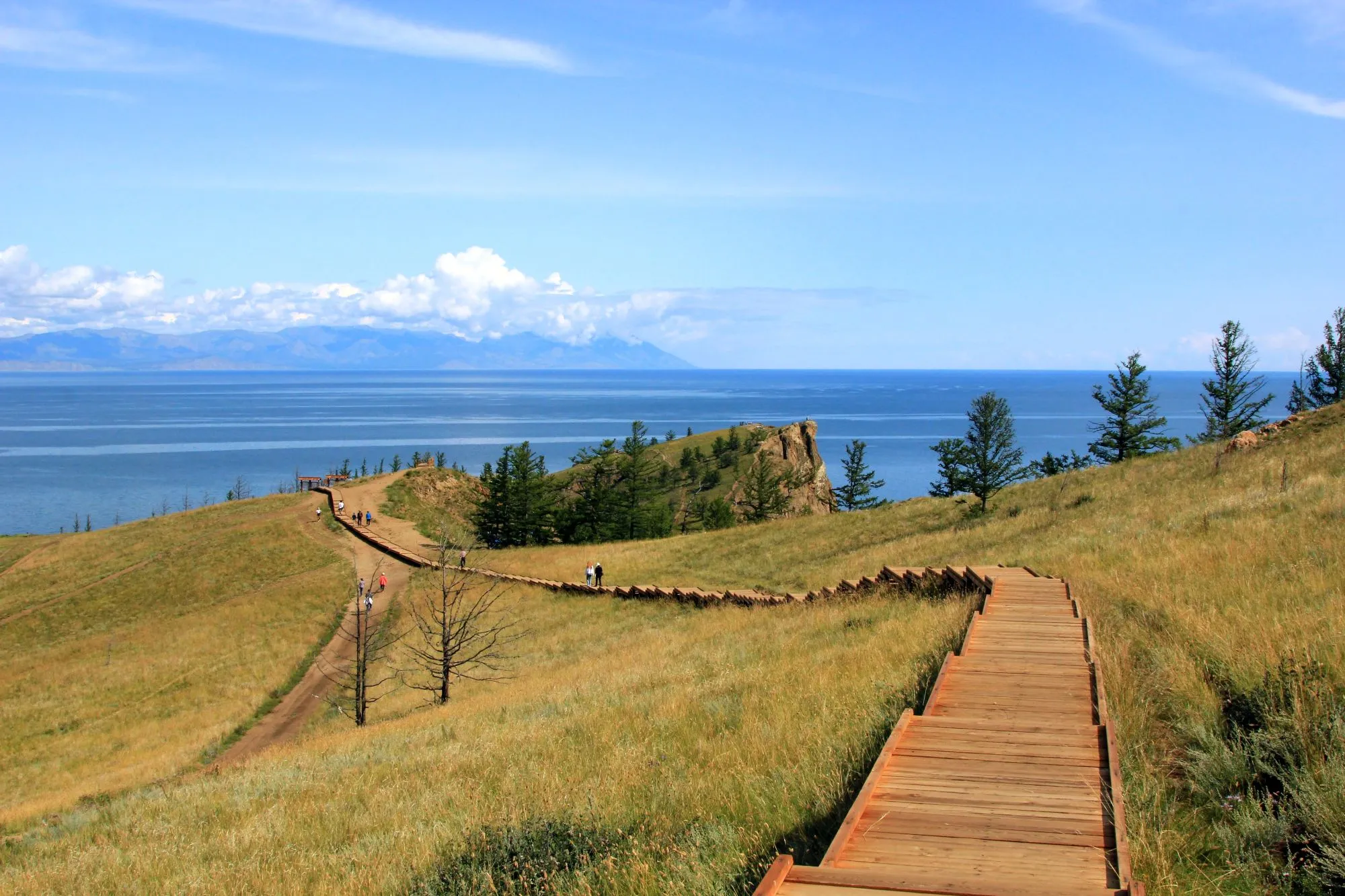
Your Olkhon Island Adventure Starts Here
Remember the image from the very beginning of this guide?
Ice groaning beneath your feet. Stars overhead. The world's deepest lake breathing quietly below a two-meter mirror of turquoise crystal. The kind of silence that modern life almost never delivers — and, once heard, never entirely leaves you.
That moment is real. It happens every February on Olkhon Island. It also happens in July, when the last light of a Siberian summer evening turns the water the color of hammered copper and the beach at Khuzhir empties out and it's just you and the lake and an inexplicable sense of having arrived somewhere that matters.
It happens in September, when the larch forest turns gold and the sky achieves a clarity that makes every photograph look professionally edited. And it happens in May, when the island wakes from winter and the southern steppe erupts in wildflowers and you have Cape Khoboy bewilderingly, completely, to yourself.
There is no wrong time to come. There is only the time you choose.
What You Now Know:
- Olkhon Island is unlike anywhere else on Earth — not as a marketing claim, but as a geographical and cultural fact
- Getting here is straightforward with the right operator handling your transfers, crossings, and logistics
- Every season delivers a completely different experience — each one worth the journey
- Safety and comfort are fully achievable in one of the world's most remote destinations, when you travel with people who know it intimately
- The window of "undiscovered" is still open — but these things have a way of closing faster than anyone expects
We Know Siberia Can Sound Daunting
The distance. The language. The cold. The sheer scale of it all.
We've heard every version of this hesitation — from seasoned travelers who had crossed six continents but paused at the word "Siberia." And we've watched every single one of them stand on the ice at Cape Burkhan on their first morning, look out across 636 kilometers of frozen lake, and go very, very quiet.
Not from fear. From something much closer to awe.
That moment — your moment — is exactly what Baikal Majestic was built to deliver.
We handle every detail between your departure gate and that clifftop: the transfers, the crossings, the accommodation, the English-speaking guides who know this island's soul. The Hivus hovercraft waiting at the shore. The warm lodge and the omul dinner at the end of a long, luminous day. The safety equipment you hope you won't need and the expertise that ensures you won't.
You bring curiosity and a willingness to be astonished. We take care of everything else.
Tell us when you want to travel, how many people are in your group, and what kind of experience you're looking for — and we'll build your itinerary from scratch. No generic packages. No crowded group buses. Just a carefully crafted journey through one of the most extraordinary places on the planet, with a team that has spent years learning how to show it properly.
The world is full of places that look extraordinary in photographs.
Olkhon Island looks better in person.
We'll see you there.— The Baikal Majestic Team